Previously we looked at two allreduce algorithms based on ring and tree. For ring allreduce, data needs to go through all ranks during the reduce scatter phase and again through all ranks during the allgather phase. For tree allreduce, data needs to travel upward to the root node during the reduce phase and then back down during the broadcast phase, making the entire process quite lengthy.
To address this, Mellanox proposed SHARP, which offloads computation to the IB switch. Each node only needs to send data once, which is then reduced by the switch, and nodes receive the complete result after one more receive operation.
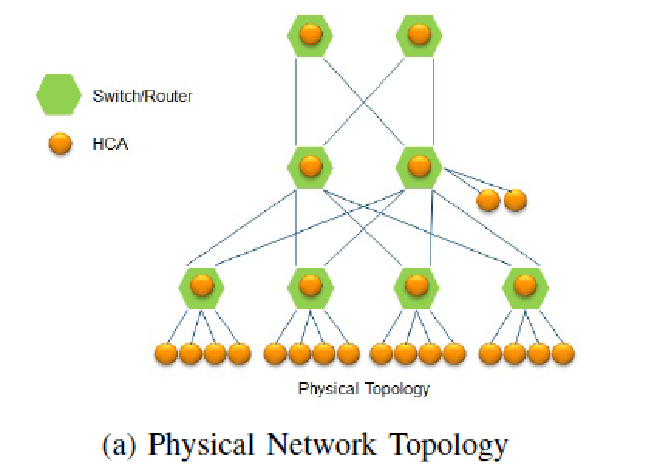
Figure 1 shows a fat-tree physical network topology, where green nodes represent switches and yellow nodes represent hosts.
Figure 1
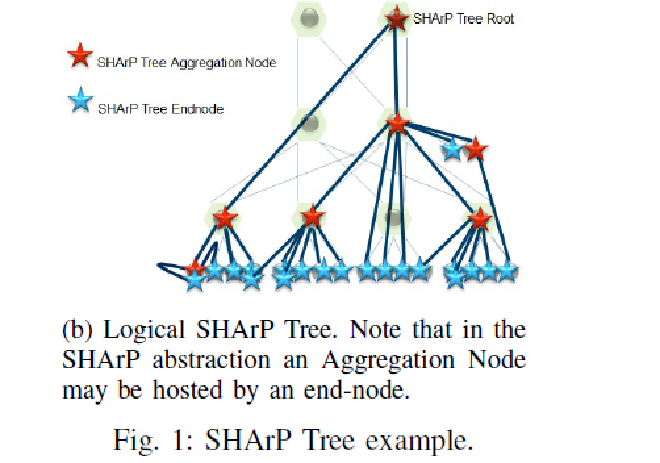
Figure 2 shows the SHARP tree derived from the physical network topology in Figure 1 after these host nodes execute SHARP initialization. The SHARP tree is a logical concept and doesn’t require the physical topology to be a fat-tree.
Figure 2
Notable points:
A single switch can be part of up to 64 SHARP trees
A SHARP tree can establish many groups, where a group is a subset created from existing hosts
Supports concurrent execution of hundreds of collective communication APIs
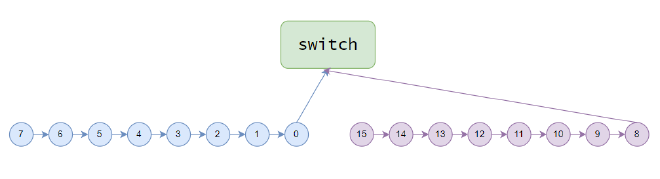
This article is based on 2.7.8. Similar to tree allreduce, intra-machine communication remains a chain. Using two machines as an example, data transmission follows the direction of arrows in Figure 3, and after the switch computes the complete result, it flows back in the opposite direction.
After NCCL completes bootstrap network initialization, it begins initializing the data network
cpp16 lines hidden
 1
 2
 3
 4
 5
 6
 7
 8
 9
10
11
12
13
14
15
16
17
18
19
ncclResult_tinitNetPlugin(ncclNet_t**net,ncclCollNet_t**collnet){void*netPluginLib=dlopen("libnccl-net.so",RTLD_NOW|RTLD_LOCAL);...ncclNet_t*extNet=(ncclNet_t*)dlsym(netPluginLib,STR(NCCL_PLUGIN_SYMBOL));if(extNet==NULL){INFO(NCCL_INIT|NCCL_NET,"NET/Plugin: Failed to find "STR(NCCL_PLUGIN_SYMBOL)" symbol.");}elseif(initNet(extNet)==ncclSuccess){*net=extNet;ncclCollNet_t*extCollNet=(ncclCollNet_t*)dlsym(netPluginLib,STR(NCCL_COLLNET_PLUGIN_SYMBOL));if(extCollNet==NULL){INFO(NCCL_INIT|NCCL_NET,"NET/Plugin: Failed to find "STR(NCCL_COLLNET_PLUGIN_SYMBOL)" symbol.");}elseif(initCollNet(extCollNet)==ncclSuccess){*collnet=extCollNet;}returnncclSuccess;}if(netPluginLib!=NULL)dlclose(netPluginLib);returnncclSuccess;}
First, it dlopens libnccl-net.so, where NCCL_PLUGIN_SYMBOL is ncclNetPlugin_v3 and NCCL_COLLNET_PLUGIN_SYMBOL is ncclCollNetPlugin_v3, so it gets the symbol ncclNetPlugin_v3 for extNet and ncclCollNetPlugin_v3 for extCollNet. The relationship between extNet and extCollNet is similar to NCCL’s bootstrap network and data network relationship, where extCollNet handles actual data communication while metadata and control information are exchanged through extNet.
Then it executes extNet initialization. extNet supports multiple backends like ib and ucx. We’re using ib, so all subsequent execution is targeting ibPlugin. ibPlugin’s logic is similar to NCCL’s ncclNetIb logic - initialization (ncclIbInit) enumerates all network cards on the current machine and saves them to a global array.
Then it executes initCollNet, which is ncclSharpInit, which also executes ibPlugin initialization, but since this was already done, nothing happens here.
The pattern is NCCL_TOPO_PATTERN_TREE, so intra-machine remains ring, but unlike NCCL_TOPO_PATTERN_SPLIT_TREE, in NCCL_TOPO_PATTERN_TREE the 0th GPU handles both network card send and receive. Assume the searched channels are as follows:
Assuming 10 channels were found, the first 5 channels are used for SHARP’s upward phase (direction of arrows in Figure 3), and the latter 5 channels for the downward phase (opposite direction). So each channel records two connection relationships: collTreeUp and collTreeDn. The first 5 upward channels only use collTreeUp, the latter 5 downward channels only use collTreeDn, but collTreeUp and collTreeDn are actually identical. We’ll only discuss collTreeUp going forward.
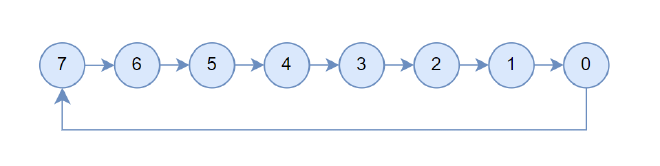
After intra-machine channel connection, it looks like Figure 4, with arrows pointing up.
Then inter-machine connection begins, which selects ranks responsible for network send/receive within machines. Taking sending as an example, this is called sendIndex, and its intra-machine connections need to be broken, as well as connections to sendIndex.
ncclResult_tncclTopoConnectCollNet(structncclComm*comm,structncclTopoGraph*collNetGraph,intrank){intnranks=comm->nRanks;intdepth=nranks/comm->nNodes;intsendIndex=collNetGraph->pattern==NCCL_TOPO_PATTERN_TREE?0:1;// send GPU index depends on topo pattern
intsendEndIndex=(sendIndex+comm->localRanks-1)%comm->localRanks;for(intc=0;c<comm->nChannels/2;c++){structncclChannel*channel=comm->channels+c;// Set root of collTree to id nranks
if(rank==collNetGraph->intra[sendIndex+c*comm->localRanks]){// is master
channel->collTreeUp.up=channel->collTreeDn.up=nranks;}if(rank==collNetGraph->intra[sendEndIndex+c*comm->localRanks]){// is bottom of intra-node chain
channel->collTreeUp.down[0]=channel->collTreeDn.down[0]=-1;}channel->collTreeUp.depth=channel->collTreeDn.depth=depth;INFO(NCCL_GRAPH,"CollNet Channel %d rank %d up %d down %d",c,rank,channel->collTreeUp.up,channel->collTreeUp.down[0]);}intrecvIndex=0;// recv GPU index is always 0
intrecvEndIndex=(recvIndex+comm->localRanks-1)%comm->localRanks;for(intc=0;c<comm->nChannels/2;c++){structncclChannel*channel=comm->channels+comm->nChannels/2+c;// Set root of collTree to id nranks
if(rank==collNetGraph->intra[recvIndex+c*comm->localRanks]){// is master
channel->collTreeUp.up=channel->collTreeDn.up=nranks;}if(rank==collNetGraph->intra[recvEndIndex+c*comm->localRanks]){// is bottom of intra-node chain
channel->collTreeUp.down[0]=channel->collTreeDn.down[0]=-1;}channel->collTreeUp.depth=channel->collTreeDn.depth=depth;INFO(NCCL_GRAPH,"CollNet Channel %d rank %d up %d down %d",comm->nChannels/2+c,rank,channel->collTreeDn.up,channel->collTreeDn.down[0]);}returnncclSuccess;}
Here sendIndex is selected as the first in the chain, and sendEndIndex as the last one. Since the last one connects to sendIndex, the connection between these two needs to be broken. Then iterating through upward channels, sendIndex’s up is set to nranks, sendEndIndex’s down is set to -1, and similarly for downward channels. The channels now look like Figure 5:
if(comm->nNodes>1&&ncclParamCollNetEnable()==1&&collNetSupport()&&collNetGraph.nChannels){intlogicChannels=comm->nChannels/2;intcollNetSetupFail=0;constintrecvIndex=0;// recv GPU index is always 0
constintsendIndex=collNetGraph.pattern==NCCL_TOPO_PATTERN_TREE?0:1;// send GPU index depends on topo pattern
for(intc=0;c<logicChannels;c++){structncclChannel*channelRecv=comm->channels+logicChannels+c;structncclChannel*channelSend=comm->channels+c;NCCLCHECK(ncclTransportP2pSetup(comm,&collNetGraph,channelRecv,1,&channelRecv->collTreeDn.up,1,channelRecv->collTreeDn.down));NCCLCHECK(ncclTransportP2pSetup(comm,&collNetGraph,channelSend,1,channelSend->collTreeUp.down,1,&channelSend->collTreeUp.up));constintrecvMaster=collNetGraph.intra[c*comm->localRanks+recvIndex];constintsendMaster=collNetGraph.intra[c*comm->localRanks+sendIndex];if(collNetSetup(comm,&collNetGraph,channelRecv,rank,nranks,recvMaster,sendMaster,comm->nNodes,1)!=1)collNetSetupFail=1;elseif(collNetSetup(comm,&collNetGraph,channelSend,rank,nranks,sendMaster,recvMaster,comm->nNodes,0)!=1)collNetSetupFail=1;}// Verify CollNet setup across ranks
NCCLCHECK(checkCollNetSetup(comm,rank,collNetSetupFail));}
Taking the up channel (channelSend) as an example, it establishes intra-node connections through ncclTransportP2pSetup. Since sendIndex and sendEndIndex’s up/down are set to nranks or -1, only the connections shown by arrows in Figure 5 will be established.
Then begins the establishment of inter-node communication links. The first rank on each machine is responsible for network sending and receiving, and this rank is called the master of that node. Then Sharp communication groups are established, which only include the master of each node.
staticintcollNetSetup(structncclComm*comm,structncclTopoGraph*collNetGraph,structncclChannel*channel,intrank,intnranks,intmasterRank,intmasterPeer,intnMasters,inttype){intrankInCollNet=-1;intsupported=0;intisMaster=(rank==masterRank)?1:0;struct{intcollNetRank;ncclConnectconnect;}sendrecvExchange;// check if we can connect to collnet, whose root is the nranks-th rank
structncclPeerInfo*myInfo=comm->peerInfo+rank,*peerInfo=comm->peerInfo+nranks;peerInfo->rank=nranks;intret=1;if(isMaster){NCCLCHECK(collNetTransport.canConnect(&ret,comm->topo,collNetGraph,myInfo,peerInfo));}// send master receives connect info from peer recv master
...// select
structncclPeer*root=channel->peers+nranks;structncclConnector*conn=(type==1)?&root->recv:&root->send;structncclTransportComm*transportComm=(type==1)?&(collNetTransport.recv):&(collNetTransport.send);conn->transportComm=transportComm;// setup
structncclConnectmyConnect;if(isMaster&&ret>0){NCCLCHECK(transportComm->setup(comm->topo,collNetGraph,myInfo,peerInfo,&myConnect,conn,channel->id));}...}
First, let’s look at executing collNetSetup for recvMaster, where isMaster indicates whether the current node is the recvMaster; then set peerInfo, where peerInfo uses the nranks-th ncclPeerInfo in comm; then check if connection through collNet is possible via canConnect, which directly returns 1 here, indicating connection is possible.
Then execute transportComm->setup to initialize communication-related resources.
Allocate collNetRecvResources resources, then allocate GPU memory used by various protocols, as well as head, tail, etc. used for synchronization, and finally execute collNetListen.
The assignment here is a bit complex, let’s first look at what the resources structure becomes after executing collNetListen. collNetRecvResources is used by nccl here, and eventually netListenComm points to an ncclSharpListenComm, where the listenCommP2P in ncclSharpListenComm points to an ncclIbListenComm, which stores the network card and socket fd being used.
collNetListen executes ncclSharpListen, which essentially calls the listen function of ib_plugin. Here we can see that netListenComm of collNetRecvResources is assigned to ncclSharpListenComm lComm.
cpp9 lines hidden
1
2
3
4
5
6
7
8
9
10
11
12
ncclResult_tncclIbListen(intdev,void*opaqueHandle,void**listenComm){structncclIbListenComm*comm;comm=malloc(sizeof(structncclIbListenComm));memset(comm,0,sizeof(structncclIbListenComm));structncclIbHandle*handle=(structncclIbHandle*)opaqueHandle;NCCL_STATIC_ASSERT(sizeof(structncclIbHandle)<NCCL_NET_HANDLE_MAXSIZE,"ncclIbHandle size too large");comm->dev=dev;NCCLCHECK(GetSocketAddr(&(handle->connectAddr)));NCCLCHECK(createListenSocket(&comm->fd,&handle->connectAddr));*listenComm=comm;returnncclSuccess;}
The ib_plugin’s listen function essentially creates a listen socket, then saves the device number dev and socket fd to ncclIbListenComm, and lComm of ncclSharpListenComm is assigned this ncclIbListenComm. IP and port are saved to opaqueHandle, i.e., myConnect.
At this point setup is complete, let’s continue looking at collNetSetup.
staticintcollNetSetup(structncclComm*comm,structncclTopoGraph*collNetGraph,structncclChannel*channel,intrank,intnranks,intmasterRank,intmasterPeer,intnMasters,inttype){...// prepare connect handles
ncclResult_tres;struct{intisMaster;ncclConnectconnect;}*allConnects=NULL;ncclConnect*masterConnects=NULL;NCCLCHECK(ncclCalloc(&masterConnects,nMasters));if(type==1){// recv side: AllGather
// all ranks must participate
NCCLCHECK(ncclCalloc(&allConnects,nranks));allConnects[rank].isMaster=isMaster;memcpy(&(allConnects[rank].connect),&myConnect,sizeof(structncclConnect));NCCLCHECKGOTO(bootstrapAllGather(comm->bootstrap,allConnects,sizeof(*allConnects)),res,cleanup);// consolidate
intc=0;for(intr=0;r<nranks;r++){if(allConnects[r].isMaster){memcpy(masterConnects+c,&(allConnects[r].connect),sizeof(structncclConnect));if(r==rank)rankInCollNet=c;c++;}}}else{// send side : copy in connect info received from peer recv master
if(isMaster)memcpy(masterConnects+rankInCollNet,&(sendrecvExchange.connect),sizeof(structncclConnect));}// connect
if(isMaster&&ret>0){NCCLCHECKGOTO(transportComm->connect(masterConnects,nMasters,rankInCollNet,conn),res,cleanup);structncclPeer*devRoot=channel->devPeers+nranks;structncclConnector*devConn=(type==1)?&devRoot->recv:&devRoot->send;CUDACHECKGOTO(cudaMemcpy(devConn,conn,sizeof(structncclConnector),cudaMemcpyHostToDevice),res,cleanup);}...}
Then begins the exchange of master information, allocating nMaster ncclConnect *masterConnects, where nMaster is the number of nodes, then copying myConnect to the corresponding position in masterConnects, executing allgather to get ncclConnect of all ranks; then copying all master-corresponding ncclConnect from allConnects to masterConnects, and finally executing transportComm’s connect to complete the establishment of Sharp communication group.
Similarly, let’s first look at what the data structure in resources becomes after executing connect. collNetRecvComm points to an ncclSharpCollComm, where the recvComm and sendComm in ncclSharpCollComm function similarly to connecting previous and next nodes in the bootstrap network, sharpCollContext is the sharp context, and sharpCollComm is the sharp communicator.
ncclResult_tcollNetRecvConnect(structncclConnect*connectInfos,intnranks,intrank,structncclConnector*recv){// Setup device pointers
structcollNetRecvResources*resources=(structcollNetRecvResources*)recv->transportResources;structcollNetSendConnectInfo*info=(structcollNetSendConnectInfo*)(connectInfos+rank);resources->collNetRank=rank;// Intermediate buffering on GPU for GPU Direct RDMA
structncclRecvMem*recvMem=resources->useGdr?resources->devRecvMem:resources->devHostRecvMem;intoffset=0;for(intp=0;p<NCCL_NUM_PROTOCOLS;p++){recv->conn.buffs[p]=(p==NCCL_PROTO_LL?resources->devHostRecvMem->buff:recvMem->buff)+offset;offset+=recv->comm->buffSizes[p];}recv->conn.direct|=resources->useGdr?NCCL_DIRECT_NIC:0;// Head/Tail/Opcount are always on host
recv->conn.tail=&resources->devHostRecvMem->tail;recv->conn.head=&resources->devHostSendMem->head;// Connect to coll comm
collNetHandle_t**handlePtrs=NULL;NCCLCHECK(ncclCalloc(&handlePtrs,nranks));for(inti=0;i<nranks;i++){structcollNetRecvConnectInfo*info=(structcollNetRecvConnectInfo*)(connectInfos+i);handlePtrs[i]=&(info->collNetHandle);}ncclResult_tres;NCCLCHECKGOTO(collNetConnect((void**)handlePtrs,nranks,rank,resources->netListenComm,&resources->collNetRecvComm),res,cleanup);// Register buffers
NCCLCHECK(collNetRegMr(resources->collNetRecvComm,recv->conn.buffs[NCCL_PROTO_SIMPLE],recv->comm->buffSizes[NCCL_PROTO_SIMPLE],resources->useGdr?NCCL_PTR_CUDA:NCCL_PTR_HOST,&resources->mhandles[NCCL_PROTO_SIMPLE]));NCCLCHECK(collNetRegMr(resources->collNetRecvComm,resources->llData,recv->comm->buffSizes[NCCL_PROTO_LL]/2,NCCL_PTR_HOST,&resources->mhandles[NCCL_PROTO_LL]));// Create shared info between send and recv proxies
NCCLCHECK(ncclCalloc(&(resources->reqFifo),NCCL_STEPS));// Pass info to send side
info->reqFifo=resources->reqFifo;info->collNetComm=resources->collNetRecvComm;for(intp=0;p<NCCL_NUM_PROTOCOLS;p++)info->mhandles[p]=resources->mhandles[p];cleanup:if(handlePtrs!=NULL)free(handlePtrs);// Close listen comm
NCCLCHECK(collNetCloseListen(resources->netListenComm));returnres;}
First record the head, tail, buffer etc. from resource to conn, handlePtrs records each master rank’s listen ip port, then execute collNetConnect to establish the Sharp communication group.
ncclResult_tncclSharpConnect(void*handles[],intnranks,intrank,void*listenComm,void**collComm){structncclSharpListenComm*lComm=(structncclSharpListenComm*)listenComm;structncclSharpCollComm*cComm;NCCLCHECK(ncclIbMalloc((void**)&cComm,sizeof(structncclSharpCollComm)));NCCLCHECK(ncclIbMalloc((void**)&cComm->reqs,sizeof(structncclSharpRequest)*MAX_REQUESTS));cComm->nranks=nranks;cComm->rank=rank;if(cComm->rank==-1){WARN("Could not determine my rank\n");returnncclInternalError;}intnext=(cComm->rank+1)%nranks;NCCLCHECK(NCCL_PLUGIN_SYMBOL.connect(lComm->dev,handles[next],&cComm->sendComm));NCCLCHECK(NCCL_PLUGIN_SYMBOL.accept(lComm->listenCommP2P,&cComm->recvComm));// From prev
structncclSharpInfo*allInfo;pid_tpid=getpid();pthread_ttid=pthread_self();NCCLCHECK(ncclIbMalloc((void**)&allInfo,sizeof(structncclSharpInfo)*nranks));allInfo[cComm->rank].hostId=gethostid();allInfo[cComm->rank].jobId=(((uint64_t)allInfo[cComm->rank].hostId<<32)|((pid^tid)^rand()));NCCLCHECK(ncclSharpAllGather(cComm,allInfo,sizeof(structncclSharpInfo)));// Find my local rank;
intlocalRank=0;for(inti=0;i<cComm->rank;i++){if(allInfo[cComm->rank].hostId==allInfo[i].hostId){localRank++;}}uint64_tjobId=allInfo[0].jobId;free(allInfo);...}
Create ncclSharpCollComm cComm, which will eventually be assigned to collNetRecvComm. Similar to bootstrap network, this will connect all master ranks head-to-tail through ib_plugin, where the connect and accept logic is identical to the previous ncclNetIb, so we won’t elaborate here. Then create ncclSharpInfo allInfo, record hostid, generate a random jobId, and execute allgather.
ncclResult_tncclSharpConnect(void*handles[],intnranks,intrank,void*listenComm,void**collComm){...structsharp_coll_init_specinit_spec={0};init_spec.progress_func=NULL;init_spec.job_id=jobId;init_spec.world_rank=cComm->rank;init_spec.world_size=nranks;init_spec.world_local_rank=0;init_spec.enable_thread_support=1;init_spec.group_channel_idx=0;init_spec.oob_colls.barrier=ncclSharpOobBarrier;init_spec.oob_colls.bcast=ncclSharpOobBcast;init_spec.oob_colls.gather=ncclSharpOobGather;init_spec.oob_ctx=cComm;init_spec.config=sharp_coll_default_config;init_spec.config.user_progress_num_polls=10000000;chardevName[MAXNAMESIZE];ncclNetProperties_tprop;ncclSharpGetProperties(lComm->dev,&prop);snprintf(devName,MAXNAMESIZE,"%s:%d",prop.name,prop.port);init_spec.config.ib_dev_list=devName;intret=sharp_coll_init(&init_spec,&cComm->sharpCollContext);INFO(NCCL_INIT,"Sharp rank %d/%d initialized on %s",cComm->rank,nranks,devName);if(ret<0){WARN("NET/IB :SHARP coll init error: %s(%d)\n",sharp_coll_strerror(ret),ret);returnncclInternalError;}structsharp_coll_comm_init_speccomm_spec;comm_spec.rank=cComm->rank;comm_spec.size=nranks;comm_spec.oob_ctx=cComm;comm_spec.group_world_ranks=NULL;ret=sharp_coll_comm_init(cComm->sharpCollContext,&comm_spec,&cComm->sharpCollComm);if(ret<0){WARN("SHARP group create failed: %s(%d)\n",sharp_coll_strerror(ret),ret);returnncclInternalError;}*collComm=cComm;returnncclSuccess;
Create sharp_coll_init_spec init_spec to initialize sharp communication context sharpCollContext, initialize init_spec, set job_id to rank0’s job_id, set rank, size etc., set init_spec.oob_colls’s oob_ctx to cComm, set oob_colls.barrier etc., oob_colls is analogous to nccl’s bootstrap network, set which network card to use, then execute sharp_coll_init, which will initialize sharp, then initialize sharpCollComm with sharpCollContext through sharp_coll_comm_init, completing the establishment of Sharp communication group.
Then return to ncclSharpConnect and begin registering memory, which will register sharp memory through sharp_coll_reg_mr, and needs to register rdma memory through ibv_reg_mr. Finally request reqFifo, record reqFifo and collNetRecvComm to info, which will later be sent to send.
ncclResult_tcollNetRecvConnect(structncclConnect*connectInfos,intnranks,intrank,structncclConnector*recv){...// Register buffers
NCCLCHECK(collNetRegMr(resources->collNetRecvComm,recv->conn.buffs[NCCL_PROTO_SIMPLE],recv->comm->buffSizes[NCCL_PROTO_SIMPLE],resources->useGdr?NCCL_PTR_CUDA:NCCL_PTR_HOST,&resources->mhandles[NCCL_PROTO_SIMPLE]));NCCLCHECK(collNetRegMr(resources->collNetRecvComm,resources->llData,recv->comm->buffSizes[NCCL_PROTO_LL]/2,NCCL_PTR_HOST,&resources->mhandles[NCCL_PROTO_LL]));// Create shared info between send and recv proxies
NCCLCHECK(ncclCalloc(&(resources->reqFifo),NCCL_STEPS));// Pass info to send side
info->reqFifo=resources->reqFifo;info->collNetComm=resources->collNetRecvComm;for(intp=0;p<NCCL_NUM_PROTOCOLS;p++)info->mhandles[p]=resources->mhandles[p];cleanup:if(handlePtrs!=NULL)free(handlePtrs);// Close listen comm
NCCLCHECK(collNetCloseListen(resources->netListenComm));returnres;}
Then return to collNetSetup, the recv end will send info to the send end, i.e., reqFifo address and collNetRecvComm.
cpp13 lines hidden
 1
 2
 3
 4
 5
 6
 7
 8
 9
10
11
12
13
14
15
16
staticintcollNetSetup(structncclComm*comm,structncclTopoGraph*collNetGraph,structncclChannel*channel,intrank,intnranks,intmasterRank,intmasterPeer,intnMasters,inttype){...// recv side sends connect info to send side
if(isMaster&&type==1){sendrecvExchange.collNetRank=rankInCollNet;memcpy(&sendrecvExchange.connect,masterConnects+rankInCollNet,sizeof(structncclConnect));NCCLCHECKGOTO(bootstrapSend(comm->bootstrap,masterPeer,&sendrecvExchange,sizeof(sendrecvExchange)),res,cleanup);}if(ret>0){supported=1;}cleanup:if(allConnects!=NULL)free(allConnects);if(masterConnects!=NULL)free(masterConnects);returnsupported;}
Then begin executing collNetSetup for the send end, which is simpler, mainly involving memory allocation and registration, then through info sent by recv, record reqFifo and comm from info to collNetSendResources.
At this point the communication link establishment is complete, next we’ll look at the api execution process
ncclResult_tncclSaveKernel(structncclInfo*info){structncclCollcoll;structncclProxyArgsproxyArgs;memset(&proxyArgs,0,sizeof(structncclProxyArgs));NCCLCHECK(computeColl(info,&coll,&proxyArgs));info->comm->myParams->blockDim.x=std::max<unsigned>(info->comm->myParams->blockDim.x,info->nThreads);intnChannels=info->coll==ncclCollSendRecv?1:coll.args.coll.nChannels;intnSubChannels=(info->pattern==ncclPatternCollTreeUp||info->pattern==ncclPatternCollTreeDown)?2:1;for(intbid=0;bid<nChannels*nSubChannels;bid++){intchannelId=(info->coll==ncclCollSendRecv)?info->channelId:info->comm->myParams->gridDim.x%info->comm->nChannels;structncclChannel*channel=info->comm->channels+channelId;proxyArgs.channel=channel;// Adjust pattern for CollNet based on channel index
if(nSubChannels==2){info->pattern=(channelId<info->comm->nChannels/nSubChannels)?ncclPatternCollTreeUp:ncclPatternCollTreeDown;}NCCLCHECK(ncclProxySaveColl(&proxyArgs,info->pattern,info->root,info->comm->nRanks));info->comm->myParams->gridDim.x++;intopIndex=channel->collFifoTail;structncclColl*c=channel->collectives+opIndex;volatileuint8_t*activePtr=(volatileuint8_t*)&c->active;while(activePtr[0]!=0)sched_yield();memcpy(c,&coll,sizeof(structncclColl));if(info->coll!=ncclCollSendRecv)c->args.coll.bid=bid%coll.args.coll.nChannels;c->active=1;opIndex=(opIndex+1)%NCCL_MAX_OPS;c->nextIndex=opIndex;channel->collFifoTail=opIndex;channel->collCount++;}info->comm->opCount++;returnncclSuccess;}
Record algorithm, protocol and other information to coll through computeColl. When using sharp, the algorithm is NCCL_ALGO_COLLNET, nChannels is set to half of the searched channel number, pattern is set to ncclPatternCollTreeUp, info->nstepsPerLoop = info->nchunksPerLoop = 1.
Then record coll to all channels, up channel pattern is ncclPatternCollTreeUp, down channel pattern is ncclPatternCollTreeDown, then create ncclProxyArgs through ncclProxySaveColl.
__device__voidncclAllReduceCollNetKernel(structCollectiveArgs*args){constinttid=threadIdx.x;constintnthreads=args->coll.nThreads-WARP_SIZE;constintbid=args->coll.bid;constintnChannels=args->coll.nChannels;structncclDevComm*comm=args->comm;structncclChannel*channel=comm->channels+blockIdx.x;constintstepSize=comm->buffSizes[NCCL_PROTO_SIMPLE]/(sizeof(T)*NCCL_STEPS);intchunkSize=args->coll.lastChunkSize;constssize_tminChunkSize=nthreads*8*sizeof(uint64_t)/sizeof(T);constssize_tloopSize=nChannels*chunkSize;constssize_tsize=args->coll.count;if(loopSize>size){chunkSize=DIVUP(size,nChannels*minChunkSize)*minChunkSize;}// Compute pointers
constT*__restrict__thisInput=(constT*)args->sendbuff;T*__restrict__thisOutput=(T*)args->recvbuff;if(blockIdx.x<nChannels){// first half of the channels do reduce
structncclTree*tree=&channel->collTreeUp;ncclPrimitives<UNROLL,1,1,T,1,1,0,FUNC>prims(tid,nthreads,tree->down,&tree->up,NULL,stepSize,channel,comm);for(ssize_tgridOffset=0;gridOffset<size;gridOffset+=loopSize){// Up
ssize_toffset=gridOffset+bid*chunkSize;intnelem=min(chunkSize,size-offset);if(tree->up==-1){prims.recvReduceCopy(thisInput+offset,thisOutput+offset,nelem);}elseif(tree->down[0]==-1){prims.send(thisInput+offset,nelem);}else{prims.recvReduceSend(thisInput+offset,nelem);}}}...}
Let’s first look at the upstream process. Since nChannels is divided by 2 earlier, channels less than nChannels are upstream channels. If it’s sendEndIndex, its down is -1, so it directly sends its data to the next rank’s buffer through send. If it’s not sendEndIndex, it needs to receive data sent from the previous rank, perform reduce with the corresponding data in its userbuff, and then send it to the up buffer.
ncclResult_tcollNetSendProxy(structncclProxyArgs*args){...if(args->state==ncclProxyOpProgress){intp=args->protocol;intstepSize=args->connector->comm->buffSizes[p]/NCCL_STEPS;char*localBuff=args->connector->conn.buffs[p];void*sendMhandle=resources->sendMhandles[p];void*recvMhandle=resources->recvMhandles[p];args->idle=1;structreqSlot*reqFifo=resources->reqFifo;if(args->head<args->end){intbuffSlot=args->tail%NCCL_STEPS;if(args->tail<args->end&&args->tail<args->head+NCCL_STEPS&&reqFifo[buffSlot].recvBuff!=NULL){volatileint*sizesFifo=resources->hostRecvMem->sizesFifo;volatileuint64_t*recvTail=&resources->hostRecvMem->tail;if(args->protocol==NCCL_PROTO_LL){}elseif(args->tail<*recvTail){// Send through network
if(sizesFifo[buffSlot]!=-1){intcount=sizesFifo[buffSlot]/ncclTypeSize(args->dtype);NCCLCHECK(collNetIallreduce(resources->collNetSendComm,localBuff+buffSlot*stepSize,(void*)(reqFifo[buffSlot].recvBuff),count,args->dtype,args->redOp,sendMhandle,recvMhandle,args->requests+buffSlot));if(args->requests[buffSlot]!=NULL){sizesFifo[buffSlot]=-1;// Make sure size is reset to zero before we update the head.
__sync_synchronize();args->tail+=args->sliceSteps;args->idle=0;}}}}if(args->head<args->tail){intdone,size;intbuffSlot=args->head%NCCL_STEPS;NCCLCHECK(collNetTest((void*)(args->requests[buffSlot]),&done,&size));if(done){TRACE(NCCL_NET,"sendProxy [%d/%d] request %p done, size %d",args->head,buffSlot,args->requests[buffSlot],size);reqFifo[buffSlot].size=size;// Make sure size is updated before we set recvBuff to NULL (from the view of recv proxy, concerning the flush)
// (reordered store after store is possible on POWER, though not on x86)
__sync_synchronize();reqFifo[buffSlot].recvBuff=NULL;// Notify recvProxy
args->head+=args->sliceSteps;resources->hostSendMem->head=args->head;args->idle=0;}}}if(args->head==args->end){resources->step=args->end;args->idle=0;args->state=ncclProxyOpNone;}}
collNetIallreduce fills the sendbuff, recvbuff and corresponding mr into sharp_coll_reduce_spec, then executes sharp_coll_do_allreduce or sharp_coll_do_allreduce_nb. After execution completes, the reduce result will be filled into recvbuff.
Here, sendbuff is the buff in the send conn, and recvbuff is the buff in the recv conn. SendProxy doesn’t know which part of the buff in recv conn is available, so reqFifo is used to coordinate between send and recv. As we can see, the conditions for determining whether data can be sent include not only checking if the queue has data but also checking if the corresponding reqFifo’s recvBuff is NULL. Only when both conditions are met can data be sent.
After sending is complete, tail is increased by sliceSteps. If head is less than tail, it means there are allreduce operations that have been sent but not completed. Then it uses sharp_coll_req_test to check if the corresponding request is complete. If complete, head is increased by sliceSteps, and the corresponding recvBuff is set to NULL to notify RecvProxy that this req has completed.
ncclResult_tcollNetRecvProxy(structncclProxyArgs*args){if(args->head<args->end){if((args->tail<args->head+NCCL_STEPS)&&(args->tail<(resources->hostSendMem->head)+NCCL_STEPS)&&(args->tail<args->end)){intbuffSlot=args->tail%NCCL_STEPS;char*recvBuff=p==NCCL_PROTO_LL?(char*)resources->llData:localBuff;intrecvStepSize=p==NCCL_PROTO_LL?stepSize/2:stepSize;reqFifo[buffSlot].recvBuff=recvBuff+buffSlot*recvStepSize;TRACE(NCCL_NET,"recvProxy [%d/%d] posted buffer %p",args->tail,buffSlot,reqFifo[buffSlot].recvBuff);args->tail+=args->sliceSteps;args->idle=0;}if(args->tail>args->head){intbuffSlot=args->head%NCCL_STEPS;if(reqFifo[buffSlot].recvBuff==NULL){// Buffer is cleared : coll is complete
TRACE(NCCL_NET,"recvProxy [%d/%d] done, size %d",args->head,buffSlot,reqFifo[buffSlot].size);args->head+=args->sliceSteps;if(args->protocol==NCCL_PROTO_LL){// ll
}elseif(args->protocol==NCCL_PROTO_SIMPLE){if(resources->useGdr)NCCLCHECK(collNetFlush(resources->collNetRecvComm,localBuff+buffSlot*stepSize,reqFifo[buffSlot].size,mhandle));resources->hostRecvMem->tail=args->head;}args->idle=0;}}}}
Here we can see that as long as the queue has space, it will dispatch the corresponding recvbuf to reqFifo. If tail is greater than head, indicating there are incomplete requests, it checks if the corresponding recvbuff is NULL. If it’s NULL, meaning it’s completed, then head is increased by sliceSteps, and collNetFlush is executed to ensure data is written to disk. The flush here is consistent with ncclNetIb, both reading local QP. After flush, resources->hostRecvMem->tail is set to head to notify the kernel there’s new data.
template<intUNROLL,classFUNC,typenameT>__device__voidncclAllReduceCollNetKernel(structCollectiveArgs*args){...if(blockIdx.x>=nChannels){// second half of the channels do broadcast
structncclTree*tree=&channel->collTreeDn;ncclPrimitives<UNROLL,1,1,T,1,1,0,FUNC>prims(tid,nthreads,&tree->up,tree->down,NULL,stepSize,channel,comm);for(ssize_tgridOffset=0;gridOffset<size;gridOffset+=loopSize){// Down
ssize_toffset=gridOffset+bid*chunkSize;intnelem=min(chunkSize,size-offset);if(tree->up==-1){prims.send(thisOutput+offset,nelem);}elseif(tree->down[0]==-1){prims.recv(thisOutput+offset,nelem);}else{prims.recvCopySend(thisOutput+offset,nelem);}}}}
If it’s recvEndIndex, it only needs to recv data. If it’s not recvEndIndex, it uses recvCopySend to receive data from the up buffer, copy it to the corresponding position in its user buffer, and send it to the down buffer.
NCCL Source Code Study - This article is part of a series.